

The Amazon plays a crucial role in the fight against climate change
The fight can’t be won there but it can most certainly be lost in the Amazon!
Direct and indirect effects for humanity
The international Panel for Climate Change (IPCC) and the World Economic Forum estimate that in the period till 2050 around 15 million people will die due to climate change. This is mainly caused by the direct effects: drought, heat and floods. I think for us in the West the biggest problem isn’t the direct effects but the indirect effects of the changing climate. The IPCC also predicts that in 2050 between 3 and 3.5 billion people will be unsure if they have enough food available. This is a bizarre high number. I assume that many of those people want to move to places where there is enough food available. This will be among others in Europe. That will create enormous tensions which will affect almost everyone.
Syria as an example
A recent example of the indirect effect of climate change is the situation in Syria. After 3 years of extreme drought in the period 2006-2010 many crops dried up and 1.5 million people moved from rural areas to the city. This caused tensions and was a contributing factor for the revolt. If in a small country as Syria 1.5 million people move due to drought, what size will the migration flow be when drought hits substantial parts of the world?
Personally I have confidence that we can get the climate under control. However, it is time that we pay extra attention to this and I will show how we can make large steps forward.
Carbon storage in the Amazon
The Amazon stores between 150 and 200 billion tons of carbon. This is 20% of all carbon that is stored on land. This equals 4000 years the CO2 emission of The Netherlands. This carbon from the Amazon is released when the forest is cut or when trees dry out and die. So the forest should not only be maintained but it should also be managed in the proper way so it doesn’t dry out.
Indigenous people as managers of the jungle
25% of the Amazon is managed by indigenous people. So they play an important role in conservation of this tropical jungle. The quality of their forests is on average higher than in other forests even compared to national parks. So, it’s important that they can live in connection with nature and in this way ensure a high quality of the forest.
Nowadays an important challenge for these people is that they also need money to pay for materials, shelter and education. They must earn this money from nature without destroying it. So cutting and selling a lot of big trees or selling the meat of wild animals on a large scale aren’t viable options.
Sources of income
During my coming journey I will show at various places how inhabitants found a way to earn from the forest while keeping a high quality of the jungle.
Finca de Las Piedras
At finca de Las Piedras the people earn money from selling Brazil nuts. This is a tree species which is naturally abundant in the Madre de Dios region in Southeast Peru. By harvesting these nuts they are able to generate a source of income from the forest without cutting down trees. In this way they can provide for their livelihood and live in connection with nature. At this region they also harvest/produce cacao, bananas, lemons and copoazú.
https://www.sustainableamazon.org/finca-las-piedras
Camino Verde
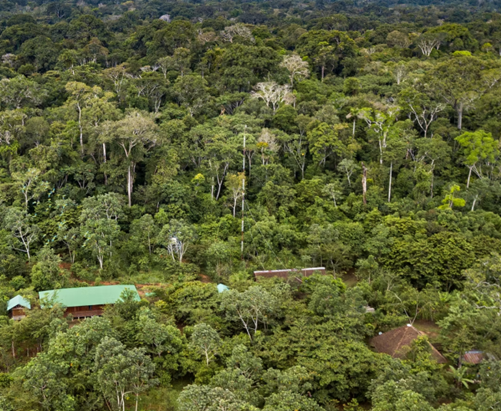
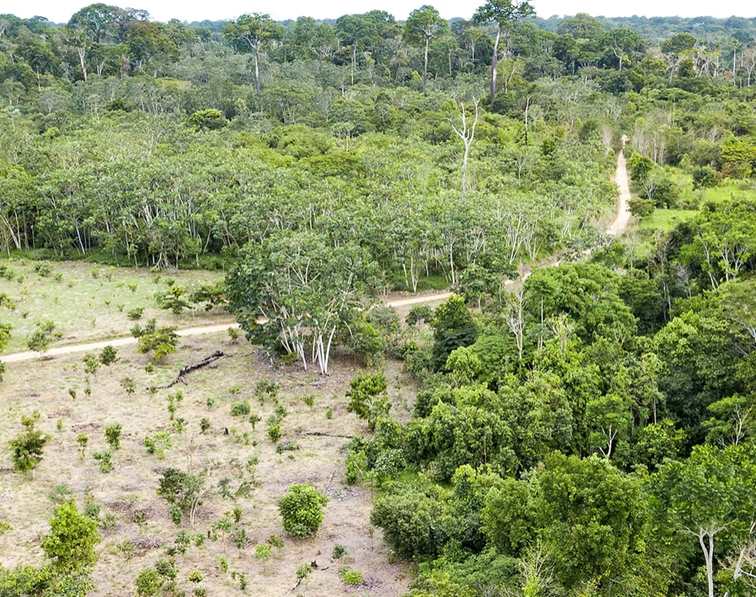
Camino Verde is a non-profit organization that restores the forest landscapes of the Amazon by strengthening forest communities. They do this by partnering with Amazonian farmers and native communities to regenerate forests and improve livelihoods. They plant regenerative agroforestry systems with a diversity of native trees. They generate a source of income from non-timber forest products. At the moment they have planted over 400 native tree species. Their reforestation centers and tree nurseries form a one-of-a-kind Living Seed Bank of Amazonian biodiversity.
At Camino Verde they cultivate cacao, vanilla, honey from native stingless bees and essential oils. These products are all harvested in a sustainable way. In this way they can earn a living and let nature flourish. This makes them a good example how people can make some money and manage the forest in a proper way. Besides managing the jungle they are also reforesting part of the property. In this way the forest captures CO2 from the atmosphere and stores it in the trees. Here everybody wins, the local people, the Amazon jungle and by helping control the changing climate it benefits us as well.
To date they have reforested 135 hectares. 150 Amazonian families of 11 native communities participate in this project. 129 hectare of primary rainforest is under active conservation and 53 hectares of secondary forest under community-managed conservation. Their 2 seedbanks produce each year 100,000 seedlings, representing over 100 native species each year.